This glossary is for the class of heat transfer, and it´s designated to be the homework for the reading comprehension for this week.
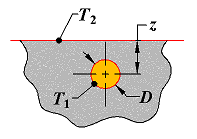
Conduction shape factor
phrase
Shape factor depends only on geometry. As radiation is emitting from a body at a high temperature, only some part of the radiation will be falling on the other body. The fall of radiation to this body depends on its orientation to the emitting body
The shape factor can be related to the thermal resistance:
Example: A simple model is proposed to calculate conduction shape factor of hollow cylinders.
es: Factor de forma de conducción
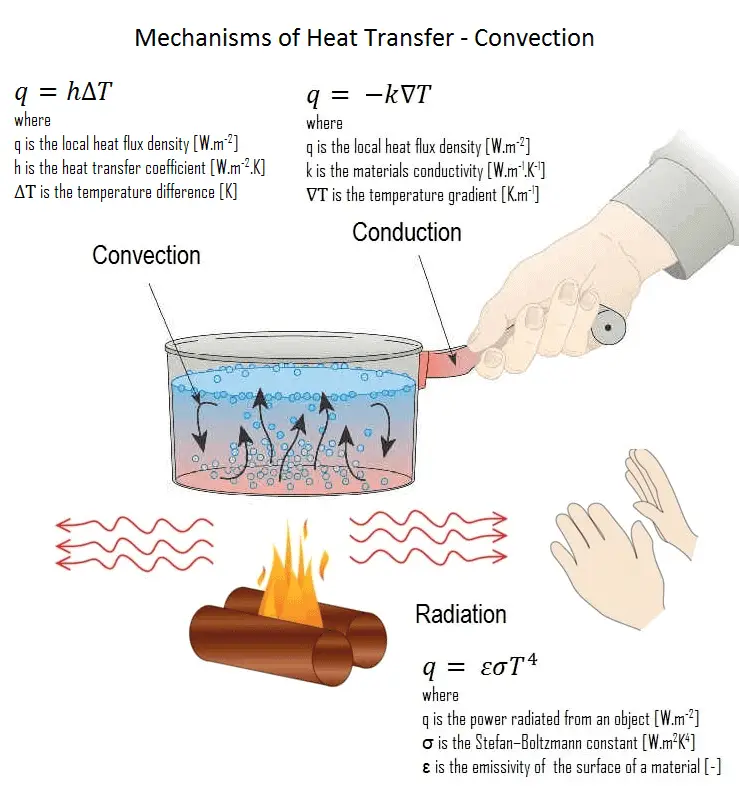
Convection resistance
phrase
is the thermal resistance of the surface against heat convection, or simply the convection resistance of the surface
Example: Note that when the convection heat transfer coefficient is very large, the convection resistance becomes zero and Ts T. That is, the surface offers no resistance to convec tion, and thus it does not slow down the heat transfer process.
es: resistencia a la convección
Critical radius of insulation
phrase
Critical radius of insulation means the radius at which the heat transfer occured is maximum. Let me explain the physics behind that. Insulation is provided for reducing the heat transfer rate from an object like cylinder or sphere. Some times adding insulation will increase the heat transfer based on the property of insulation and outside condition( h=convective heat transfer coefficient)
Example: On windy days, the external convection heat transfer coefficient is greater compared to calm days. Therefore critical radius of insulation will be greater on calm days.
es: Critical radius of insulation
Cylinder conduction resistance
phrase
Steady state heat transfer through pipes is in the normal direction to the wall surface (no significant heat transfer occurs in other directions). Therefore, the heat transfer can be modeled as steady‐state and one‐dimensional, and the temperature of the pipe will depend only on the radial direction, T = T (r).
es: Resistencia de conducción del cilindro
Efficiency
noun
In physics and engineering, efficiency is the ratio between the amount of energy a machine needs to make it work, and the amount it produces.
Example: When several insect species of the same general type are potential pests of the crop, the economic EFFICIENCY of biological control technique is extremely restricted
es: eficiencia
Fin effectiveness
conjunction
It is defined as the ratio of the actual heat transfer that takes place from the fin to the heat that would be dissipated from the same surface area without fin.
Example: It has been argued that a more realistic approach to the heat transfer advantage of finning is to utilise the ‘fin effectiveness’, defined by Heggs
es: Eficacia de la aleta
Fin efficiency
conjunction
Fin efficiency is defined as the ratio of actual heat flow of the fin to that which would be obtained with a fin of constant temperature uniformly equal to the base surface temperature, that is, one with infinite thermal conductivity.
Example: The fin heat transfer is determined by using fin efficiency. The fin efficiency is calculated using a theoretical approach where the whole fin is considered to be at the same temperature as the fin base.
es: Eficiencia de las aletas
Interface resistance
phrase
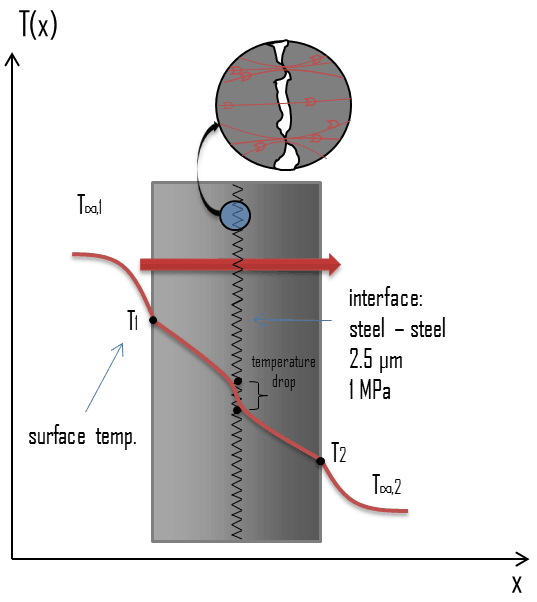
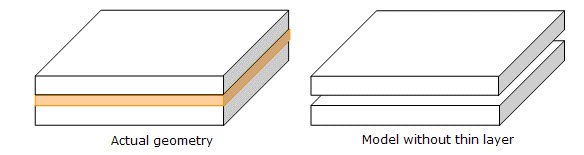
Impairment of heat flow caused by the imperfect contact between two materials at an interface.
Quantitatively, the temperature difference across the interface divided by the heat flux through it.
Example: The interfacial resistance between PEM and electrode can be used as a metric to quantify interfacial compatibility
es: Resistencia de interfaz
Plane wall conduction resistance
phrase
Consider one-dimensional heat conduction through a homogeneous, isotropic wall of thickness 8 with constant thermal conductivity k and constant cross-sectional area A. The wall is insulated on its lateral faces and constant but different temperatures t1 and f2 are maintained at its boundary surfaces. Obviously temperature varies only in the direction normal to the wall and the temperature potential causes heat transfer in the positive x-direction.
Example: It is known that Plane wall conduction resistance is easy to calculate with the fouriers equation
es: Resistencia a la conducción de la pared plana
Radiation resistance
phrase
When the wall is surrounded by a gas, the radiation effects, which we have ignored so far, can be significant and may need to be considered. The rate of radiation heat transfer between a surface of emissivity and area As at tem perature and the surrounding surfaces at some average temperature
Example: is the thermal resistance of a surface against radiation, or the radiation resistance, and is the radiation heat transfer coefficient.
es: resistencia a la radiación
Sphere conduction resistance
phrase
Consider the above diagram to represent an orange, we are interested in determining the rate of heat
transfer through the peel Heat flow is along radial direction
outwards.
Example: Following the analysis above, the conduction resistance for the spherical layer can be found in the next page
es: Resistencia a la conducción de la esfera
Surfaces
noun
the external or superficial aspect of something
the exterior or upper boundary of an object or body
Example: 7% of all the water on the Earth's surface is salt.
es: superficies
Thermal contact conductance
phrase
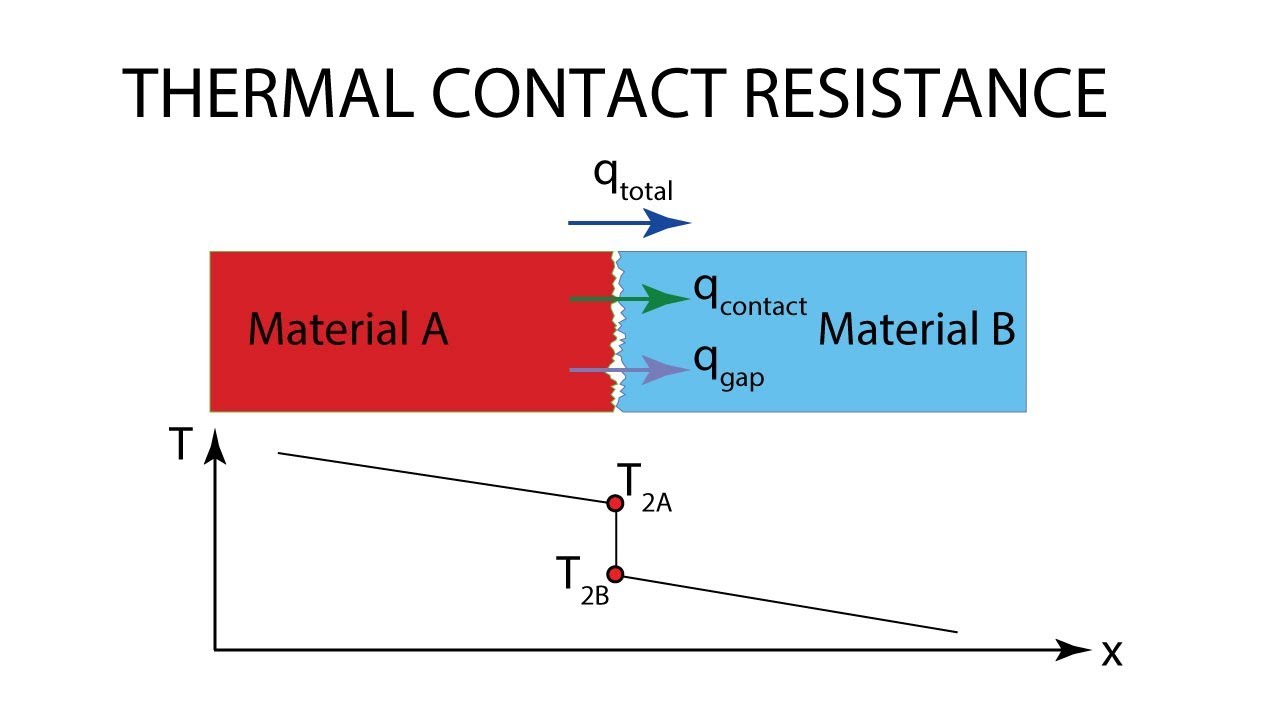
in physics, thermal contact conductance is the study of heat conduction between solid bodies in contact. The thermal contact conductance coefficient, hc, is a property indicating the thermal conductivity, or ability to conduct heat, between two bodies in contact. The inverse of this property is termed thermal contact resistance.
es: Conductancia de contacto térmico
Thermal contact resistance
phrase
In physics, thermal contact resistance is the study of heat conduction between solid bodies in contact. The thermal contact resistance coefficient, is a property indicating the thermal resistance to conduct heat, between two bodies in contact.
Example: The limited number and size of the contact spots results in an actual contact area which is significantly smaller than the apparent contact area. This limited contact area causes a thermal resistance
es: Resistencia al contacto térmico
total thermal resistance
phrase
Resistivity is a material property and refers to that material's ability to resist the flow of heat. Resistance on the other hand is an object property and depends on both the resistivity of the material and its overall thickness within that particular object.
The heat flow through a building construction depends on the temperature difference across it, the conductivity of the materials used and the thickness of the materials. Of course the temperature difference is an external factor. The thickness and the conductivity are properties of the material. A greater thickness means less heat flow and so does a lower conductivity.
Example: The total resistance of an element includes all of the resistances of the individual materials that make it up as well as both the internal and external air-film resistance. Its units are the inverse of conductivity.